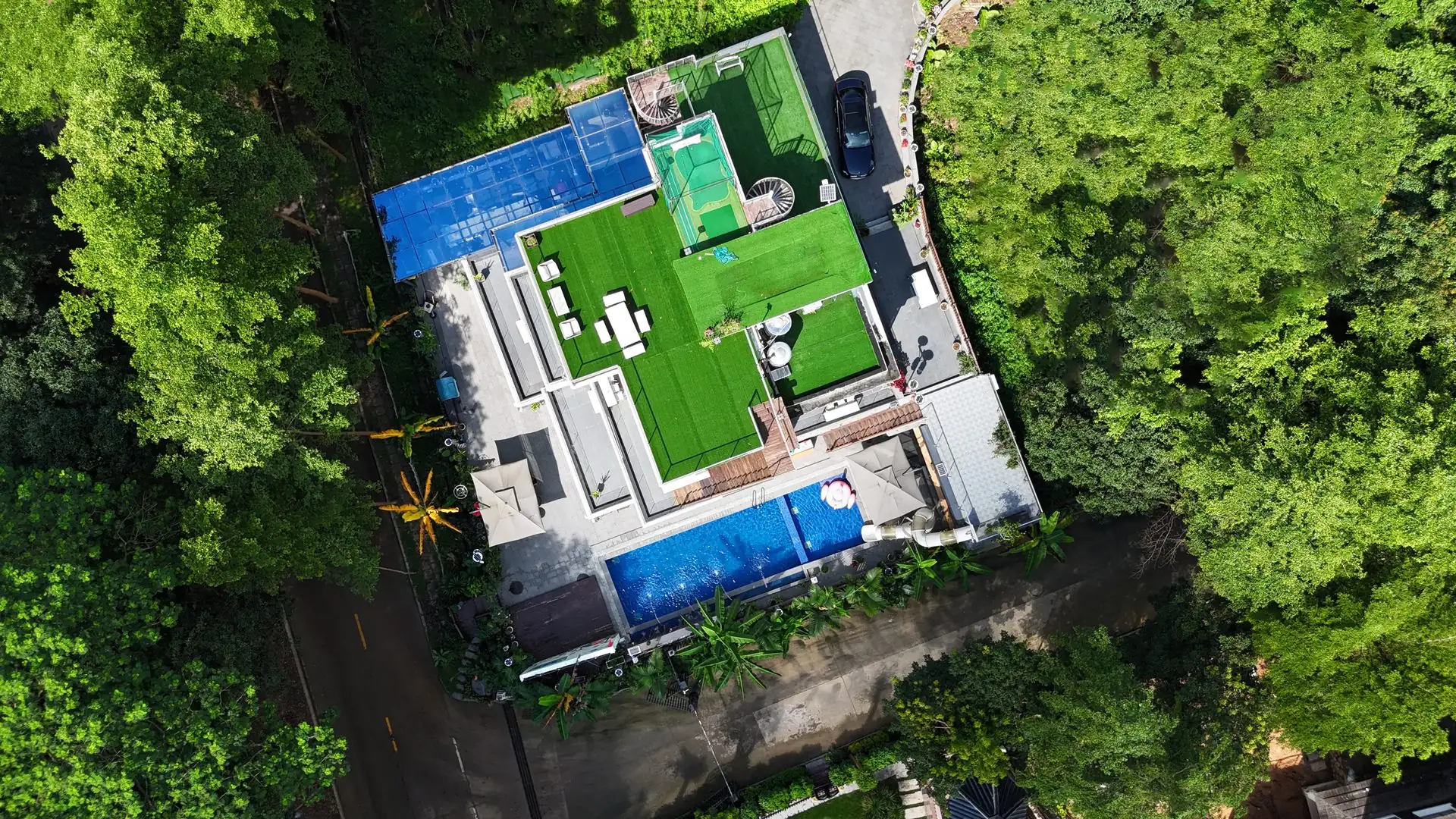
Have you ever wondered what it feels like to spend a few days 'living in the mountains'? Wake up to birdsong, open the window to rolling hills, watch clouds drift by day and a sky full of stars at night. No alarm clocks, no meetings, no traffic — only the mountain breeze and the sound of the stream. Mountain living isn't an escape; it's a return to life as it should be. Cuixi Villa is hidden in the forests of Mayangxi, Changtai — a 7-bedroom standalone villa with a courtyard pool. Spend a few days in the mountains and you'll discover just how slow life can be.
I. What Makes Mountain Living So Appealing?
🌅 Sunrise: Woken by light, not by an alarm
A sunrise in the mountains is nothing like the city. The sky brightens little by little — from deep blue to pale blue, then to the pale light of dawn, and slowly the outline of the hills emerges. If you're up early, stand on the terrace and watch: sunlight creeps inch by inch over the peaks, as if someone were gilding the mountains. A city sunrise is 'making do after the alarm'; a mountain sunrise is 'a gift after waking naturally'.
🐦 Birdsong: the mountains' 'background music'
In the city, your background noise is car horns, AC units, and neighbors renovating. In the mountains, it's the chirping of all kinds of birds, the buzz of insects, the rustle of wind through the leaves, and the sound of the stream in the distance. These aren't noises — they're 'white noise' that relaxes the mind and calms the heart. You'll find that falling asleep to these sounds works better than any sleep playlist.
☁️ Mountain mist: clouds are frequent guests in the hills
Mountain areas are often cloudy and misty, especially at dawn and after rain. Sometimes you open the window to find the opposite hill half-hidden in mist, like a fairyland. Sometimes the clouds hang low, rising from the valley and drifting past your eyes. Watching the clouds is one of the most healing things about mountain living — you do nothing at all, just sit and watch them drift by as the hills appear and fade, and time seems to slow down.
✨ Starry skies: it's been a long time since you've seen so many stars
In the city you can barely see stars — light pollution is too severe. But in the mountains, on a clear night, look up and the sky is full of them. With luck you'll see the Milky Way. Lying in the lounge chair in the courtyard, watching the stars, is a nightly ritual of mountain living. You'll realize how many stars there really are — and the memory of cooling off on summer nights as a child comes rushing back.
II. The Mountain Experience at Cuixi Villa
🪟 Rooms with a view of the hills
Every room in the villa has a window facing the hills. Wake up in the morning and you can see the mountains without even getting out of bed. Draw the curtains and the hills are right there. Misty on overcast days, green on sunny days, rainy on wet days — each weather has its own flavor. The rooms are bright and airy, and the mountain breeze carries the scent of grass and trees through the window.
🏡 Terrace: watch the clouds drift
The villa has a large terrace with tables, chairs, and lounge chairs. In the afternoon, brew a pot of tea and sit on the terrace watching the hills, the clouds, and doing nothing at all. The clouds move slowly, and so does time. You'll discover that 'doing nothing' can be so comfortable. City people fear 'wasting time', but in the mountains, wasting time is the whole point.
🚶 A morning walk in the hills
The mountains are at their best in the early morning — the air is cleanest, the temperature most comfortable, the light softest. Walk the paths around the villa; you don't need to go far, 20 to 30 minutes is enough. The sound of leaves underfoot, the feeling of dew on your trouser cuffs, the coolness in your lungs with each deep breath — these are experiences unique to mountain living.
⭐ Stargazing at night
After 10 p.m., the mountains fall silent. Lie back in the courtyard lounge chair, or sit by the pool, and look up. Stars appear one by one, more and brighter. With luck you'll catch a shooting star. At that moment you'll feel the things that anxious you aren't so big after all. Before the universe, we are small, and so are our worries.
🍵 Tea brewed with mountain spring water
Water in the mountains is different from city tap water. Brew tea with spring water and it's more fragrant, sweeter. Tea lovers know it at once. Drinking tea in the mountains feels completely different from the city — no hurry, no next meeting, no 'finish this cup and get back to work'. Just sip slowly, talk slowly, and watch the hills slowly.
III. A Day in the Mountains (no-rush version)
Mountain living has no 'schedule', but it can have a 'rhythm'. The following is for reference only — live it however you like.
- 🌅 06:00-07:00 Early risers watch the sunrise — a mountain sunrise is worth getting up for
- 🌄 07:00-08:00 Walk the hills, breathe fresh air, and watch the village wake up
- 🍚 08:00-09:00 Breakfast — eat slowly, no rush
- ☕ 09:00-11:00 Terrace: read / brew tea / daydream, or tend the plants in the courtyard
- 🚶 11:00-12:00 Wander nearby: Gushanchong / by the stream / along the fields
- 🍜 12:00-13:00 Lunch with local fresh ingredients, then rest
- 😴 13:00-15:00 Nap time! Mountain naps are especially sweet
- 🏊 15:00-17:00 Pool swim / private hot-spring soak / terrace afternoon tea
- 🌇 17:00-18:30 Watch the sunset — mountain sunsets are especially beautiful
- 🍲 18:30-20:00 Dinner — cook yourself or let the butler do it
- 🌙 20:00-22:00 Walk / stargaze / tea and talk — no phones
- 😴 22:00-23:00 Sleep — the mountains give the deepest sleep
💡 Key point: the schedule is a 'reference', not a 'to-do list'. Sleep when you're sleepy, eat when you're hungry, zone out when you want — the essence of mountain living is 'having no purpose'.
IV. Mountain Activities for Different Weather
☀️ Sunny days: the bright hills
On sunny days the hills are emerald green, every leaf lit up by the sun. Great for: outdoor walks, pool swimming, sunbathing on the terrace, photos, cloud-watching. Clear nights have the most stars — be sure to go out and look.
🌧️ Rainy days: the poetic hills
Many find rain disappointing, but rainy days in the mountains have a special charm. The sound of rain on the leaves, the mist flowing through the hills, the scent of earth and greenery in the air — a rainy mountain is more Zen than a sunny one. Great for: listening to rain with a book indoors, soaking in the private hot spring (especially atmospheric in the rain), tea and daydreaming, watching the rain.
☁️ Overcast days: the gentle hills
Overcast hills are gentle — soft light, no harsh sun or heat. Great for: going for a walk, photos (the most even light), sitting in the courtyard all afternoon. Overcast days are perfect for 'doing nothing', because no bright sun is urging you to 'go do something'.
V. Mountain Retreat vs. Beach Holiday: What's the Difference?
Many people's first choice for a holiday is the beach, but the mountain experience is completely different. Each has its merits — it depends what you're after:
💡 In one line: go to the mountains if you want 'stillness', to the beach if you want 'action'. Mountain living turns inward, beach living turns outward — it depends on what you need right now.
VI. Which Season Is Best for a Mountain Retreat?
The answer: all four seasons work, each with its own charm.
🌸 Spring (Mar-May)
Everything comes back to life and the hills are covered in blossoms. Gushanchong's rapeseed and plum flowers are beautiful. The temperature is comfortable — neither cold nor hot. Best for walks and photos.
☀️ Summer (Jun-Sep)
The mountains are typically about 2–3°C cooler than the city. The pool is standard, and playing in the water is refreshing. Evenings are cool and breezy. The season of the brightest stars.
🍂 Autumn (Oct-Nov)
Crisp autumn air and the bluest skies. The hills show their richest layers. Great for outdoor sports and hiking. The wild berries ripen too.
❄️ Winter (Dec-Feb)
Few people, deep quiet — the forest all to yourself. The best season for the private hot spring. Sitting around the stove with tea is pure atmosphere. Visiting for New Year feels especially festive.
VII. What Guests Said After Their Mountain Stay
"We stayed three days, and my screen time dropped from 7 hours a day to 1. Not on purpose — I just genuinely forgot to look. Since getting back, my sleep is much better."
— Ms. Chen, from Xiamen, internet industry
"I brought my parents. At first they said 'what's so good about staying in the mountains', but after two days they didn't want to leave. My mom said the air is great, my dad said the water is sweet. Now we come several times a year."
— Mr. Li, from Quanzhou, traveling with parents
"On the rainy day I thought we'd be bored, but sitting by the window listening to the rain, drinking tea, and watching the hills became the most comfortable day of the whole trip. It turns out doing nothing can be this comfortable."
— Ms. Wang, from Zhangzhou, freelancer
VIII. Book Your Mountain Retreat
Mountain living isn't 'checking off a sightseeing spot' — it's a 'lifestyle experience'. We recommend at least 2 days 1 night, with 3 days 2 nights being ideal. The longer you stay, the more you feel the mountain's rhythm.
- Book 2-4 weeks ahead for weekends and holidays
- Long stays (a week or more) get discounts — the longer, the better the value
- Every season has its own beauty — don't overthink 'the best time'
- Rainy days have their own flavor too — don't cancel just because it rains
- Bring a book, bring a notebook — the mountains will give you inspiration
🏔️ Spend a few days in the mountains — live a slower life
📞 +86 189 6510 6119
Tell the butler 'I want a few days in the mountains' and we'll arrange the experience for you
🌿 The mountains are right there — you only need to come.